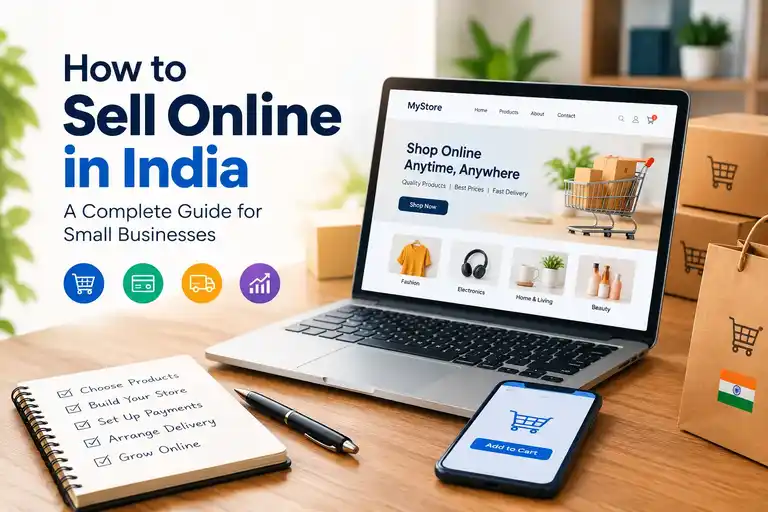
Online selling removes the boundaries of a single city, shop or locality. A small retailer can reach buyers across states without opening multiple outlets.
At the same time, selling online is not only about listing a product. Buyers compare prices, check reviews, read descriptions and look at product images before placing an order. A weak listing or a slow website can send them to a competitor. In this guide we will explain in detail how to sell online in India if you are planning to lauch your ecommerce website.
A practical plan covering product selection, platform choice, documents, listings, payments, shipping and promotion helps new sellers avoid common mistakes and build a store that actually converts visitors into customers.
Start Small, Grow Steadily
You do not need a large inventory or a big budget to begin. A focused product range, accurate listings and consistent promotion are enough to build momentum.
These are the core stages every new online seller should complete. Each step can be handled one at a time, so the process feels manageable even for a first-time entrepreneur.
Start by choosing products that match customer demand and your budget. Clothing, jewellery, home decor, beauty products and handmade items are some options to explore. Before investing in inventory, research your competitors and compare their prices. Calculate product costs and shipping expenses as well, because a product can generate sales without making a good profit.
The right platform depends on your business goals and target audience. Marketplaces such as Amazon India and Flipkart help eligible sellers reach existing shoppers. Social media platforms such as Instagram and Facebook can help you connect directly with customers. However, your own e-commerce website gives you greater control over branding and the shopping experience.
Before accepting orders, check the documents required by your chosen platform. These may include PAN details and bank account information. You should also review the GST rules that apply to your business. Requirements can differ according to your sales channel and business circumstances, so verify the latest official guidelines before starting.
Your product listings should help customers understand what they are buying. Use clear titles and accurate descriptions along with high-quality product images. Include important details such as size and material where relevant. Explain the main benefits in simple language so customers can make informed decisions.
A smooth ordering process makes online shopping easier. Offer suitable payment options such as digital payments and cash on delivery where available. Compare shipping providers based on their delivery coverage and charges. Use secure packaging to protect products during transit, and explain your return and refund policies clearly.
Launching your store is only the beginning. You also need to attract visitors who are interested in your products. A suitable marketing strategy helps you improve visibility and build customer trust. Businesses should combine organic promotion with paid campaigns when their budget allows.
Marketplace, social media and your own website each serve a different purpose. Many successful sellers use more than one channel, starting with the one that matches their budget and audience.
| Marketplaces | Social Media | Your Own Website |
|---|---|---|
| Reach existing shoppers | Connect directly with customers | Full control over branding |
| Faster setup for beginners | Quick product demonstrations | Custom shopping experience |
| Competitive pricing pressure | Depends on audience activity | Own customer data |
| Platform fees and commissions | Limited checkout options | Payment integration required |
| Lower marketing effort to begin | Great for feedback and queries | Best for long-term growth |
| Limited control over store design | Content reach can vary | Needs SEO and promotion |
If you want to build your own store, a professional website designing company in Delhi can help you create a mobile-friendly website with product pages and payment integration. Because of that, customers can explore your products and place orders through a dedicated online store.
Following a structured order keeps the setup organised and reduces confusion. Here is the same journey broken down into practical actions. India is a rapidly growing potential ecommerce market for manufacturers and individuals planning to sell online in India.
A store without traffic will not generate orders. Each promotion channel below supports a different part of the customer journey, from first discovery to repeat purchase.
Optimize your product titles and descriptions with relevant search terms. Improve website speed and mobile usability as well. Strong internal linking helps visitors discover related pages while making your website easier for search engines to understand.
Share product demonstrations and useful posts on platforms such as Instagram and Facebook. You can also publish customer feedback and answer common questions. This helps people understand your products before making a purchase.
Publish helpful articles that answer questions your customers often ask. A clothing store can share styling guides while a home decor business can publish interior design tips. Link relevant articles to product pages so readers can explore suitable products.
Use Google Ads and Meta Ads to reach relevant audiences. Start with a manageable budget and test different advertisements. Track purchases and enquiries before increasing your spending, so you can understand which campaigns deliver useful results.
Send relevant product updates and special offers to customers who have agreed to receive marketing messages. You can also share information about new arrivals and useful product recommendations. Existing customers then have more reasons to return to your store.
Measure which channels bring visitors, enquiries and orders. Review product page performance and improve listings that receive traffic but few conversions. Consistent tracking keeps your marketing budget focused on what actually works.
Online selling changes what a small business can achieve. These are the practical advantages new sellers notice once their store starts running smoothly.
Sell beyond your city and reach customers across states without new outlets.
Start without spending on rent, interiors or multiple physical locations.
Your store keeps accepting orders even when your shop is closed.
Track which products sell and which pages convert visitors into buyers.
Reviews and messages help you improve products and answer buyer doubts.
Email and offers give existing customers reasons to order again.
Different categories need different photography, pricing and marketing approaches. These are some of the most commonly explored options for new online sellers.
Promotion is not a one-time task. These actions work best when repeated consistently over time.
Some sellers manage the initial setup on their own. Professional support becomes more valuable as the store grows.
A custom ecommerce website, structured SEO, product page optimisation, paid campaign management and email automation all require specific skills. Handling everything alone can slow down growth or lead to missed opportunities. Over the years FutureGenApps® have gained customer trust as the best web designing company in India.
Online selling should not depend entirely on short-term campaigns or discounts.
SEO can build organic visibility over time while useful content can continue attracting buyers through search. Paid campaigns can support visibility for selected products and seasons. Social media keeps your brand active, and a well-optimised website creates a better experience after visitors arrive.
Understanding how to sell online in India is the first step towards building a successful online business. Long-term growth also depends on having a professional website and a clear marketing strategy. If you want to sell your products online then contact our ecommerce website designing company in India.
FutureGenApps® provides website development and digital marketing services to help businesses establish their online presence. If you want to launch an online store or improve your existing website, contact FutureGenApps® to discuss your requirements.
Talk to FutureGenApps® Today About Your Online Selling Requirements.
Reach out to our web development & digital marketing team to start your ecommerce project.